Español
 English




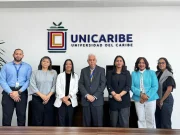

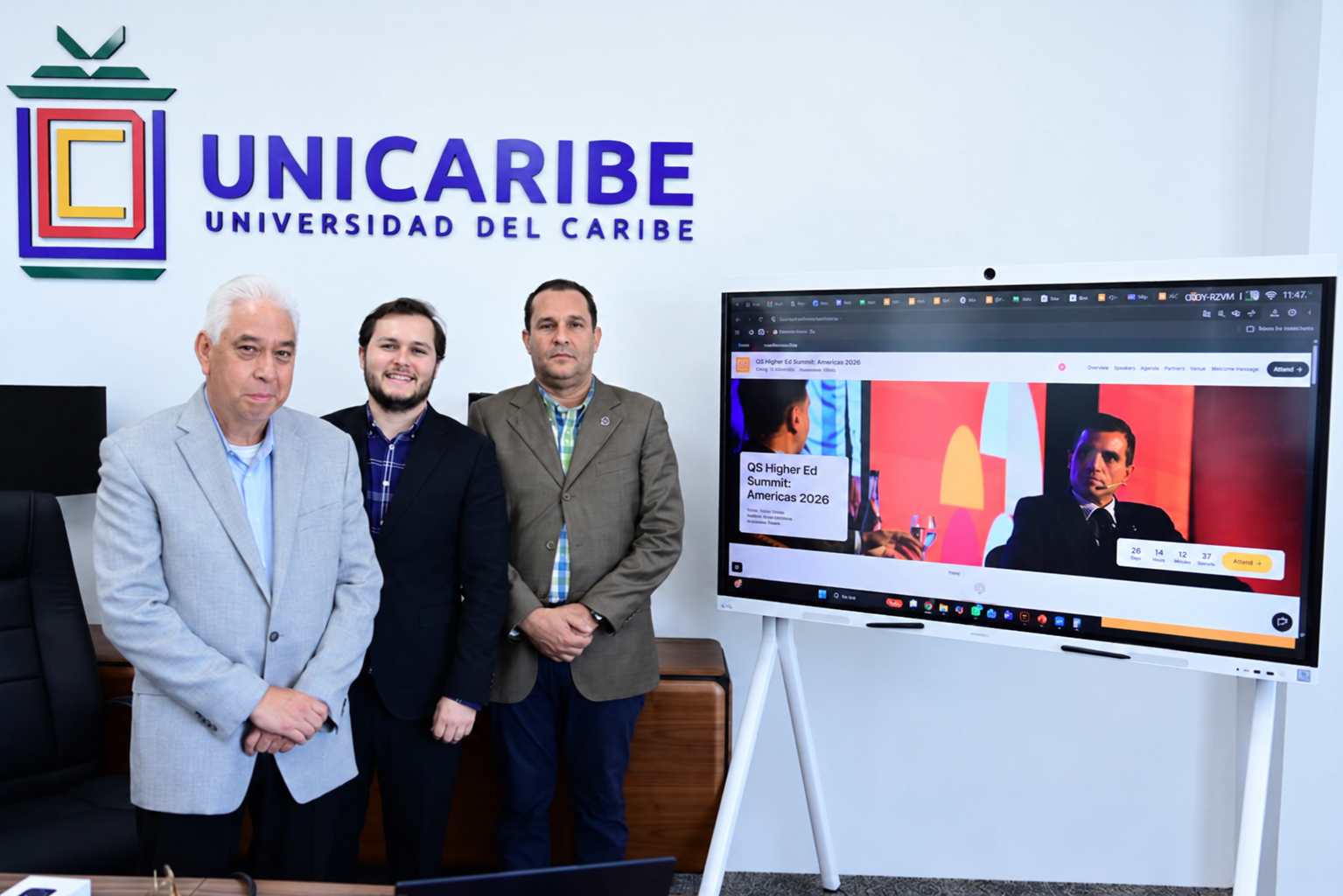
Santo Domingo.– On Thursday, September 3, the University of the Caribbean (UNICARIBE) and the Autonomous University of Santo Domingo (UASD) held a working meeting focused on the data submission cycle for the 2028 QS Ranking and the areas in which both institutions can collaborate during the process.
UNICARIBE President Ricardo Ramírez and Vice President for Research Julián Peña welcomed Professor Jairo Espino, a representative from UASD. The discussion focused on the indicators used by QS to evaluate institutions of higher education and on the experience both institutions have gained in previous cycles.
Two of these indicators took up a significant portion of the agenda: academic reputation and reputation among employers, which account for 50% of the total score in the regional ranking. The first reflects the assessment of the international academic community; the second, employers’ perception of the education provided to graduates.
The participants agreed that improving performance in international rankings requires a sustained strategy that is not limited to the reporting period. On that basis, they examined medium- and long-term measures: increasing research output, expanding its dissemination, signing agreements with foreign institutions, and strengthening ties with the private sector.
“Rankings are a self-assessment process that allows universities to measure their performance against international standards,” said Vice Rector Julián Peña during the meeting.
The delegations also compared their respective procedures for collecting and validating institutional data, a critical aspect of the process: when information is scattered, the progress made is not adequately reflected in the evaluation.
Both universities agreed to continue the exchange program for the next academic year. For UNICARIBE, these initiatives are part of a broader institutional effort aimed at consolidating its scientific output and strengthening its presence in global higher education systems. In addition, they reinforce efforts toward SDG 4, Quality Education, and SDG 17, Partnerships for the Goals, to achieve these objectives.
Author:
Julián C. Peña-Bermúdez, M.Eng. – Vice President for Research