Español
 English






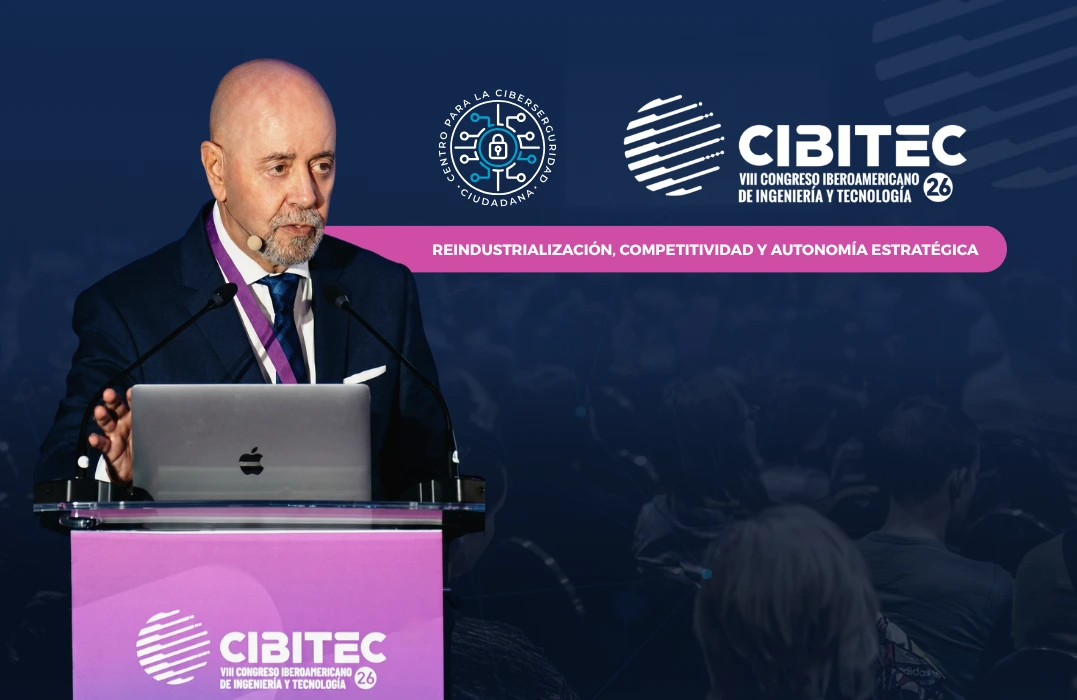
The CIBITEC 2026 Ibero-American Congress on Engineering and Technology was held on June 3 and 4 at the School of Industrial Engineering of the Polytechnic University of Madrid, in the Spanish capital.
The conference addressed the major challenges and opportunities facing industry and technology from a strategic and interdisciplinary perspective. Over the course of two days, institutional leaders, companies, and experts gathered to discuss reindustrialization, competitiveness, and strategic autonomy, with a particular focus on sectors such as the chemical industry, energy management of waste, biomethane, hydrogen, the electrification of the economy, and nuclear technologies. The program concluded with reflections on the role of engineering, business innovation, talent management, and the training of professionals who will lead the industry of the future.
The topics discussed have a direct impact on the ability of Europe and Latin America to strengthen their economic competitiveness, accelerate innovation, and move toward greater strategic autonomy. The conference also highlighted the importance of collaboration between universities, businesses, and public administrations to foster talent, knowledge transfer, and the continuous training of professionals capable of adapting to a constantly evolving technological environment. Taken together, these areas not only promote economic growth and the creation of high-value-added jobs but also contribute to a more sustainable, innovative industry that is better prepared to face the challenges of the future.
UNICARIBE was represented at the conference by Rector Ricardo Ramírez, who spoke at the opening ceremony, and Emilio Mínguez, who also participated in his capacity as president of the Madrid Association of Industrial Engineers. On the second day, Marlon Molina, director of UNICARIBE’s Center for Citizen Cybersecurity (CCC), also participated in the roundtable discussion: “Digitalization for Competitiveness, AI, and Quantum Computing”; a session in which he had the opportunity to present the CCC project and the national initiative, through which the Dominican Republic has become the first country with a program to strengthen cybersecurity awareness among its citizens.
Author: Marlon Molina, Engineer – Executive Director of the Center for Citizen Cybersecurity (CCC) – UNICARIBE