Español
 English


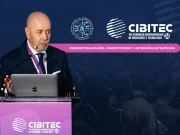
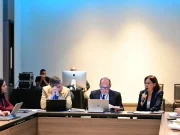
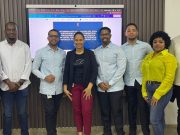
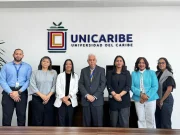
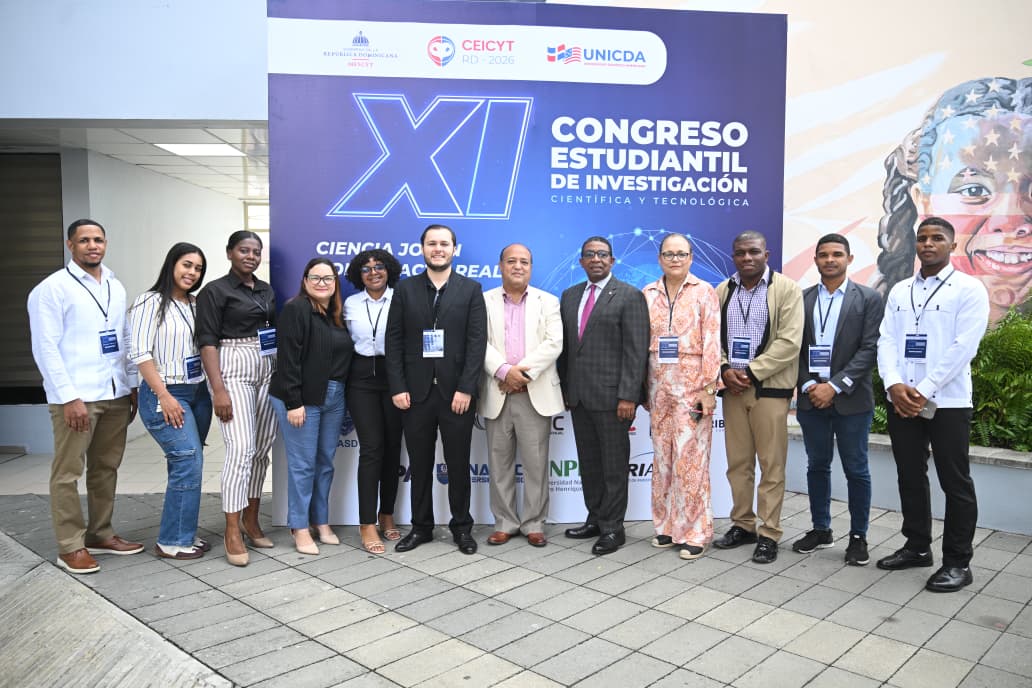
Santo Domingo. – Students from the University of the Caribbean (UNICARIBE) participated in the 11th Student Congress on Scientific and Technological Research (CEICYT 2026), held on September 16 and 17 at the Dominican American University (UNICDA), the nation’s leading forum for promoting scientific research conducted by young university students.
The UNICARIBE delegation consisted of students majoring in Municipal Management, Environmental Management and Renewable Energy, Political Science, and Port Administration, who presented seven research projects in oral and poster formats, addressing topics related to public policy, maritime trade, automation, sustainability, urban planning, public management, and participatory budgeting.
Among the papers presented are “Analysis of Feminist Policies in Latin America and the Caribbean: Strategies and Challenges 2016–2026,” by Alexandra Herrera Jaquez; “The Role of Maritime Transport in the Dominican Republic’s Imports: A Statistical Analysis Based on DGA Data, 2025–2026,” by Vianny Nicole Fragoso Capellan and Roberto Faustino Ynoson Foster; and “Impact of the Automation of Customs Processes on the Operational Efficiency of the Port of Río Haina from 2022 to 2025,” by Gabriel Cuevas Lorenzo.
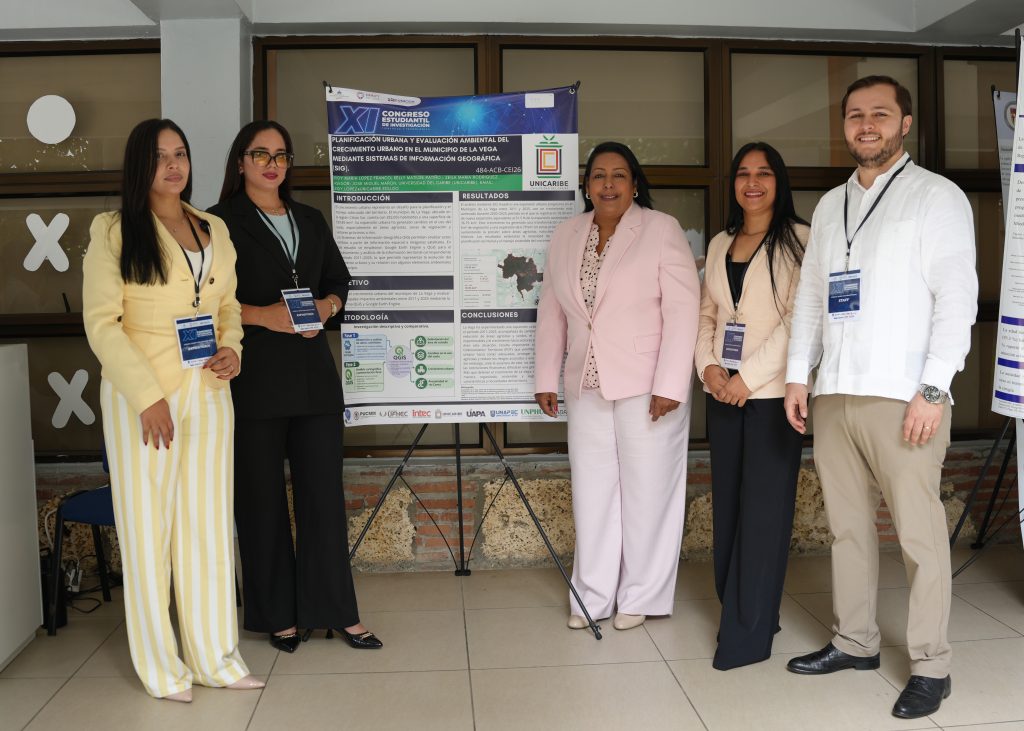
Also participating were Diana Lucia Morales Parra and Kamila Mendez Rubel, who presented research on sustainability in higher education in the Dominican Republic and the Caribbean; Leidy Maria Lopez Franco, Kelly Matilde Patiño, and Zeila Maria Rodriguez, who presented a study on urban planning and the environmental assessment of urban growth in La Vega using geographic information systems; Ramón de Jesús Arias Soto and María Elena Quezada Morillo presented an analysis of Dominican state reform; and Rodolfo Torres Calzado and Emmanuel Alexander Upia Ruiz presented a study on gaps in the implementation of participatory budgeting in the Dominican Republic.
CEICYT 2026 brought together students from 23 institutions of higher education. Of the 494 proposals received by the Ministry of Higher Education, Science, and Technology (MESCyT), 353 research projects were selected for presentation and evaluation during the conference. In addition, the MESCyT announced a total of RD$1 million in prizes to recognize the highest-rated projects.
UNICARIBE’s participation is part of the initiatives promoted by the Office of the Vice President for Research and the Research Training Program, aimed at introducing students to research during their university education and encouraging their participation in academic settings where they can present their findings, exchange experiences, and strengthen their research skills.
Through these initiatives, the Office of the Vice President for Academic Affairs aims to ensure that research extends beyond the classroom and becomes a learning experience in which students learn to identify problems, analyze information, communicate their findings, and develop proposals related to the challenges in their community.
Through its participation in the 11th CEICYT, UNICARIBE reaffirms its commitment to SDG 4, Quality Education, by strengthening a culture of student research and creating opportunities for its students to take their first steps in generating and disseminating scientific knowledge.
Author:
M. Ing. Julián C. Peña-Bermúdez – Vice President for Research